
Engineering is the act of creating Technology.
Engineering is yet another field for which it seems that children today have little understanding. A study conducted by the Science Museum of Boston asked children what came to mind when they thought of engineering. Instead of recognizing engineering as a process, children most often saw it as an object. For example, mechanics were engineers because they worked on cars, another complex technology.
Bringing All Aspects of STEAM Together
Very few children identified the process of innovation which, at its core, is the heart of engineering. This process neatly ties together all other aspects of STEAM education. Individuals first need to observe the world and make predictions about what sort of object or idea would improve upon it (Science). They must understand the relationship between objects or concepts and be able to add new elements to those equations (Math). They must design and build something (Technology). Finally, they must decide on the form taken by the object (Art).
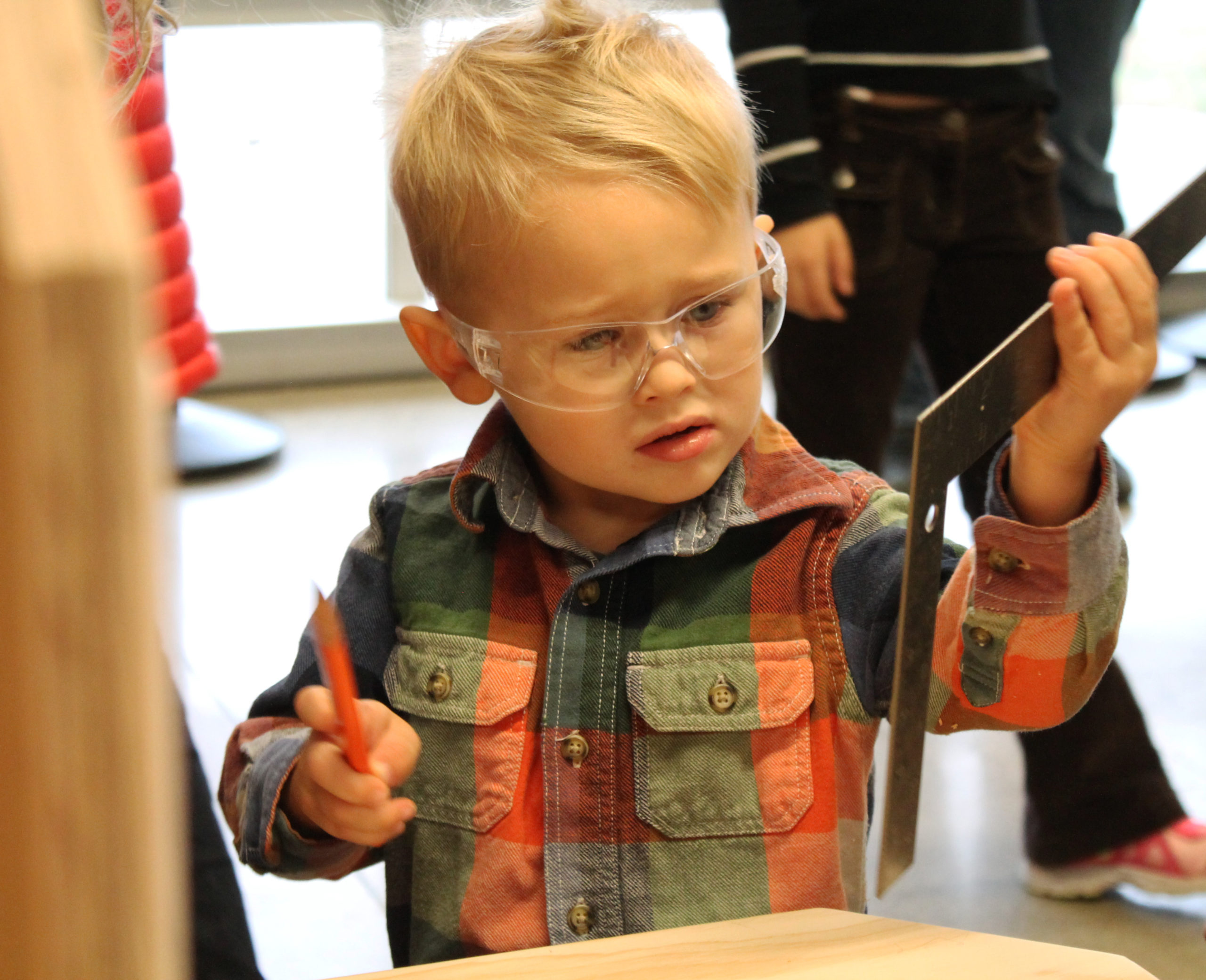
All these seemingly complex processes come very quickly to most children, which is beautiful. As educators, we can encourage the design process by asking children how they might solve a problem. We also need to allow them to try, and then try again. Engineering, as a concept, can’t happen metaphorically or hypothetically. Instead, individuals must attempt to put their ideas into action.
The Importance of Testing and Redesigning
Further, children must have an opportunity to test and redesign. Some ideas do not work at first and discovering how to solve problems is a crucial aspect of the engineering process. This is the reason children need to recognize technology and engineering in all their forms, not just as the complex aspects that permeate our lives today. If we teach children to believe that only computer scientists are able to create new and relevant technology, they are unlikely to succeed as young engineers. In that sense, the critics of STEAM education for young people have a point. It is improbable for a four-year-old to understand the intricate workings of a modern computer.
Once children realize that engineering is the act of trying to improve on something, in any capacity, the process becomes much more accessible for them. We need to encourage them to keep trying.
– Chris

