Pollinator Blend
Harvested nectar plant seeds from CMSM’s beautiful Butterfly House take home a pack to enjoy a piece of the museum in your home garden! Seeds may include but not limited to; California Giant Zinnias, Cosmos, Coneflower, Marigolds, Wild Bergamot, Blazing Star, Mexican Sunflower, Daisy, New England Aster, Black-Eyed Susan, Giant Sunflower, Dwarf Zinnias
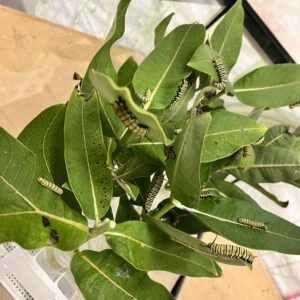
Planting Common Milkweed for Monarchs
What to Know about Common Milkweed…
- Also known as Asclepias Syriaca and will grow to be 2’ to 4’ tall
- Produces lovely pink blooms for a good source of nectar for pollinators
- Milkweed is essential for the Monarch butterfly life cycle; it is their Host Plant!
- Monarch caterpillars feed exclusively on the leaves and the adult butterflies need milkweed to lay their eggs.
- Milkweed requires full sun (at least 6-8 per day)
- Milkweed seeds require a cold stratification process.
What does a cold stratification process mean?
Stratification occurs naturally when seeds are planted in the ground outdoors through the cold winter. Milkweed plants require a period of cold temperatures to break their dormancy cycle
Many plants require a period of cold temperatures to break their dormancy cycle with woody plants and herbaceous perennials being some of the more common species. Some popular plants that require stratification include many of the Milkweed species, Purple Coneflower, Black-Eyed Susan, Blazing Star, and many others.
Seed packets will inform if there is a cold period requirement for germination, but it is always a good idea to research any germination needs!
When to Plant
There are 2 options for planting Common Milkweed (Asclepias Syriaca).
1.) Plant in the Fall; If you are going to plant in the fall, it is best to plant the seeds before the first freeze of the year. As long as the ground is still soft, you can plant them directly in the ground.
- Sow milkweed seeds by scattering them on the soil surface 1/4 to 1/2 inch apart
- Full sun is best!
- Then cover with about 1/4 inch of additional soil
- Lightly water to set seeds and wait for Spring
- Milkweed will remain underground over the winter and the cold temperatures and moisture stimulate germination
2.) Plant in the Spring; begin sowing seeds indoor using a Ziplock bag and then transplant in the spring after the last frost of the season.
- Wet a paper towel so that it just damp
- Place a few seeds (10-15) in between the paper towel
- Place the paper towel into the Ziplock bag and seal it up tight
- Place in your refrigerator for 4-8 weeks
- Spritz paper towel regular to keep the moisture; do not over dampen
- After the cold stratification process in the refrigerator the seedlings will be ready to transplant into small potting containers
- Transplant into the ground after the last frost of the season in your area
- Full sun is best!