Good morning from #CMSMatHome!
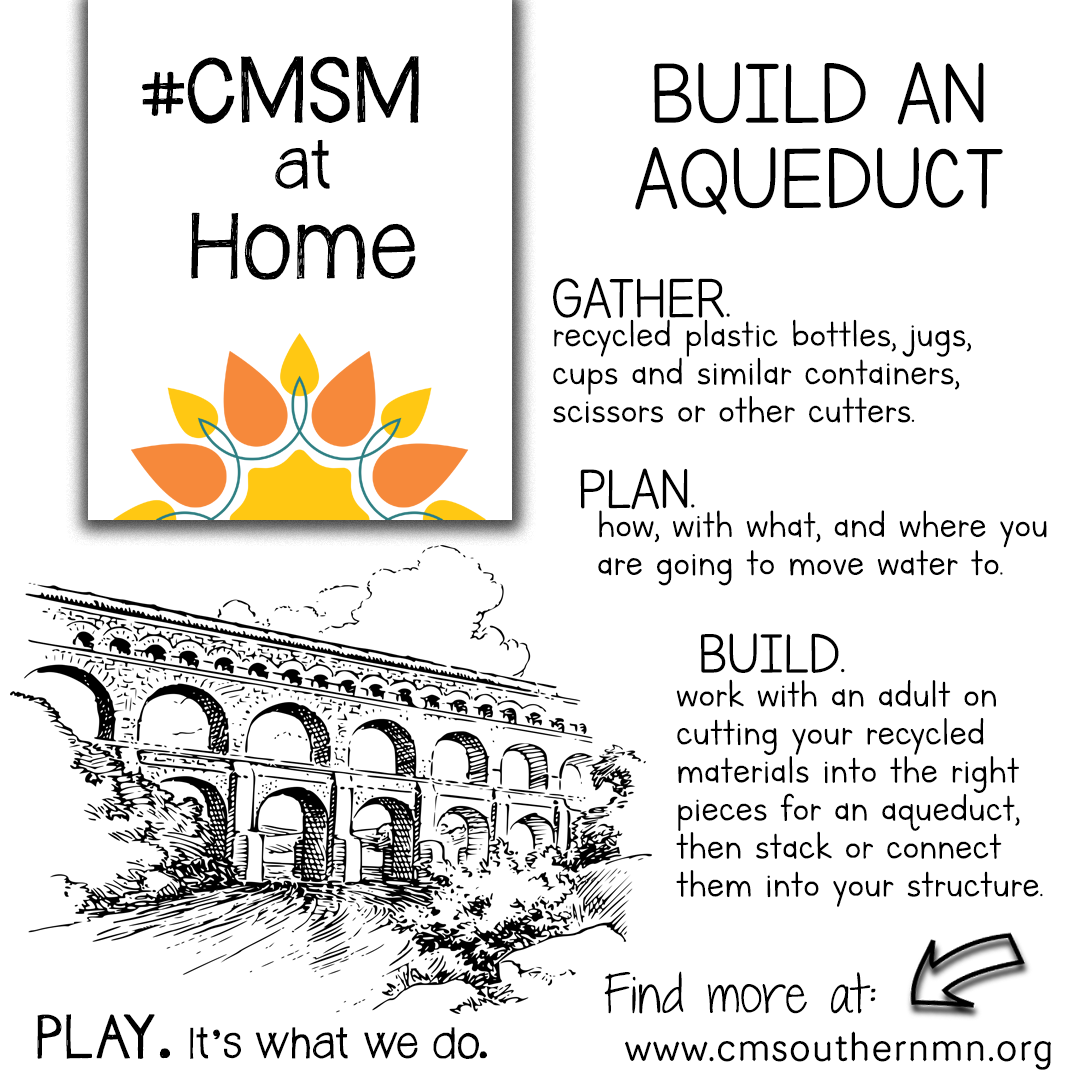
Are you familiar with aqueducts? We can build one at home today!
Gather recycled plastic bottles, jugs, cups and other containers, and get a scissors or box cutters. Plan where you are going to move water, and with what. Cut the recycled plastic items with the help from an adult and start designing your structure. Stack the loose parts to channel water in different ways. Can you challenge yourself to build an aqueduct that runs more than 6 inches?
Further Your Learning
- Aqueducts are one of the engineering miracles of ancient Rome, before plumbing was invented. They are structures built specifically for the transportation of water, and may supply water to cities or to farms for irrigation. Water may be moved underground, through a tunnel or a pipe, at ground level through a canal, or above the ground on a bridge.
- Early aqueducts had to rely on the force of gravity to move water over long distances. Water could only move from a high point to a lower point. Modern aqueducts use electric pumps to move the water along. When you made your aqueduct, did you use gravity?
- Can you channel water from one side of the sink (or tub) to the other, or from one pan to another?
- Sketch out a plan for an aqueduct that would carry water from a reservoir to a city or from a river to a field that needs irrigation.